



updated 04-28-2017
“If my engine were in general use we would never hear of monoxide deaths or smog caused by these engines.” – Russell Bourke
Built in 1954; 38 pounds, 30 cubic inches, 35 hp or more at 5,000 RPM, 76 hp at 10,000 rpm; successfully tested up to 20,000 rpm; Estimated up to 5 HP per cubic inch with Compression ratio up to 20:1; Fuel air ratio: 30:1 to 50:1The Bourke Engine was designed by Russell Bourke in the 1920s, as an improved two stroke engine. Despite finishing his design and building several working engines, the onset of World War II, lack of test results,[1] and the poor health of his wife compounded to prevent his engine from ever coming successfully to market. The main claimed virtues of the design are that it has only two moving parts, is light weight, powerful, has two power pulses per revolution, and does not need oil mixed into the fuel.
The operating cycle is very similar to that of a current production spark ignition two-stroke with crankcase compression, with three modifications:
- The fuel is injected directly into the air as it moves through the transfer port.
- The engine is designed to run without using spark ignition once it is warmed up. This is known as auto-ignition or dieseling, and the air/fuel mixture starts to burn due to the high temperature of the compressed gas, and/or the presence of hot metal in the combustion chamber.
- The piston stops at top dead centre for hydrogen detonation and/or complete combustion of the fuel.
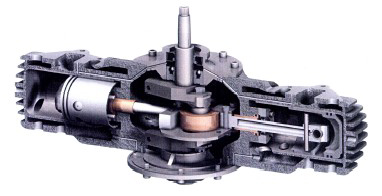
The pistons are connected to a Scotch Yoke mechanism in place of the more usual crankshaft mechanism, which slightly reduces the acceleration of the pistons.
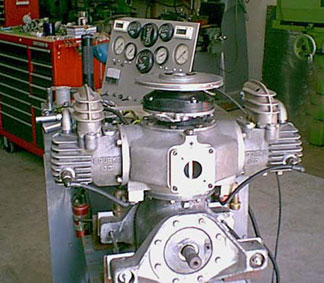
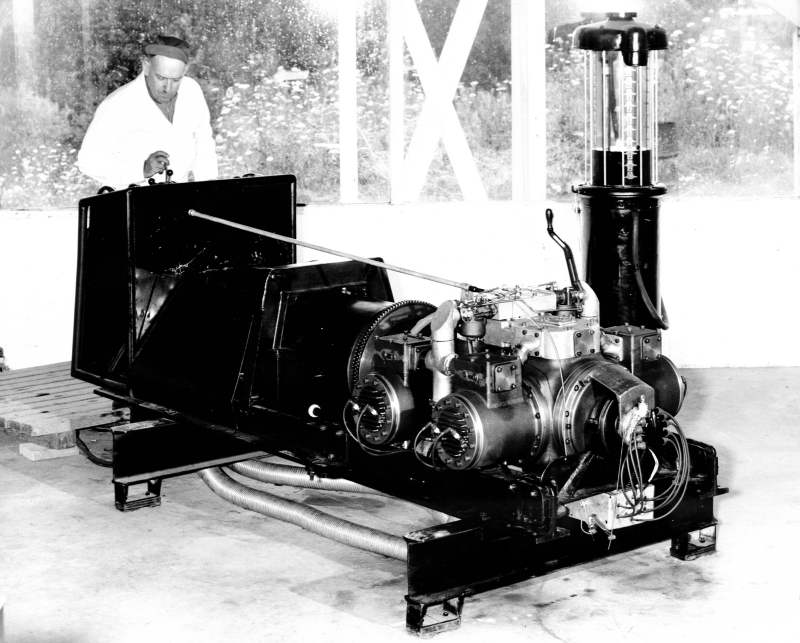
Robert Bourke taught engine maintenance at the Unites States Air Service School at Kelly Field, Texas in 1918. The Army Air Force was impressed in 1932 when he built a working prototype and awarded him a contract to build an aviation prototype. According to legend he did. . . .
The crank is enclosed and is isolated from piston ring blowby thus this engine doesn’t require an oil filter! The piston rods go through the crank housing, keeping the pistons isolated from the crank oil. The engine is rugged, the piston cylindrical rod is supported at two points, the rod is a straight throw, there is no piston slap or cylinder wear. . . . the Bourke engine runs smoothly on low grade fuels, even 20 Octane, hydrogen or highly diluted alcohols! The Bourke engine has cool exhaust, what this implies is very impressive thermal efficiency. The reason for this is the incredibly long dwell angle as the piston pauses at TDC longer because of the Scottish Yoke design.Because of this inherent design and very high 15:1 to 24:1 compression ratio, the fuel is burned before the piston reacts, thus Bourke’s engine is similar to a gun firing a projectile, as the hot burnt gas expands the temperature cools, to the point that during the exhaust stroke the gas is cool enough to touch at the exhaust port. Regular engines are still combusting during the power stroke but Bourke’s engine burns most of the fuel before the piston starts the power stroke.
Lower compression gasoline engines (8:1) are not good at complete combustion. In fact at car races you can see flame shooting out the exhaust pipes – the fuel is still burning even as it is exits the cylinder and is vented to the atmosphere.
– www.veteranstoday.com/2013/08/19/the-bourke-engine-could-revolutionize-private-aviation/
Bourke 400 4 cylinder / 2 cylinder cut away animation
Notice the clockwise rotation of the crank throw and the counter clockwise rotation of the Bourke tripple slipper bearing. There are 3 layers to the bearing. The outer bearing layer rotates counter clockwise. The middle and inner bearing layers rotate counter clockwise also acting as speed reducers of lower ratio’s keeping bearing friction down to a minimum.
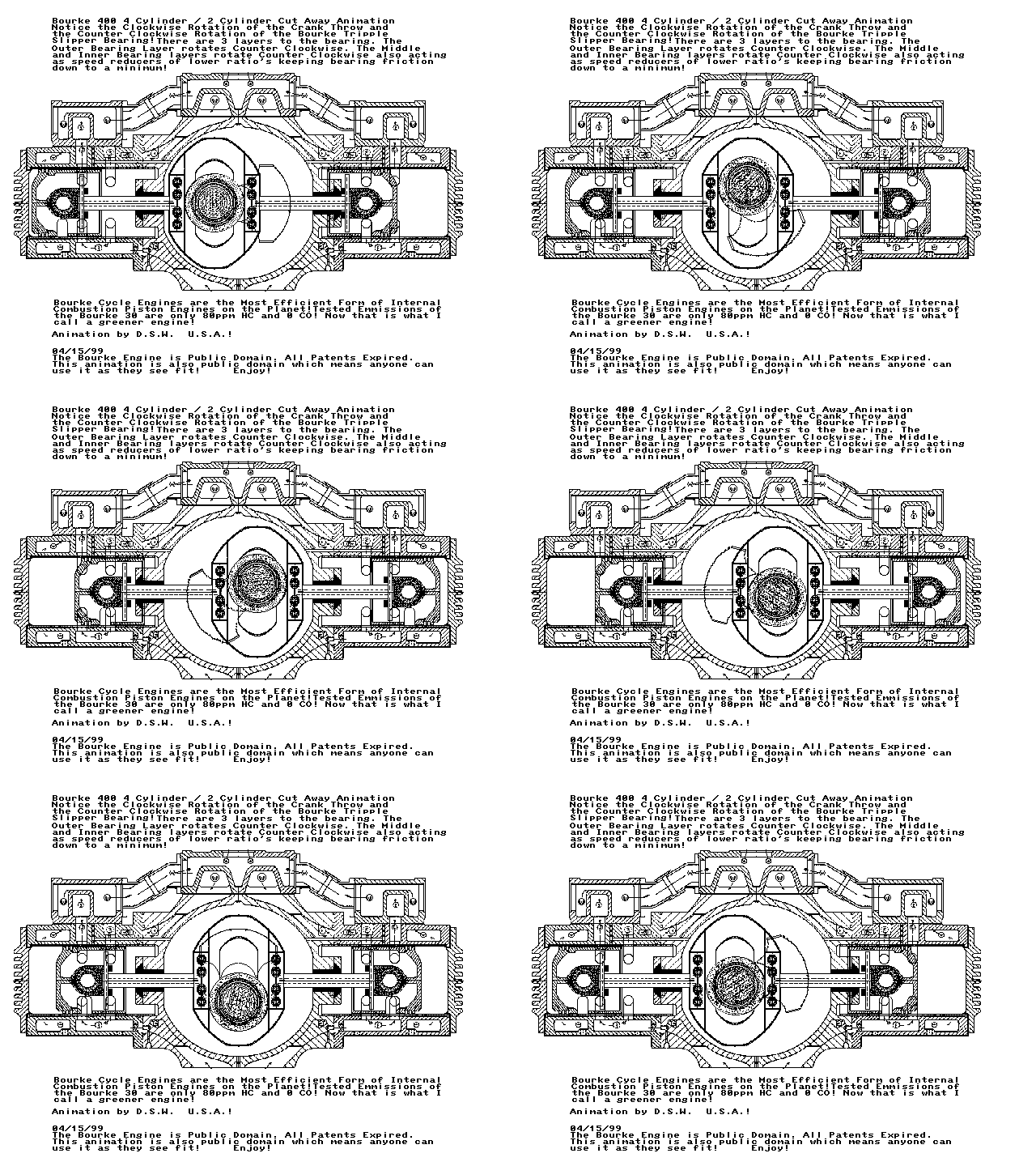
Bourke cycle engines are the most efficient form of internal combustion piston engines on the planet. Tested emissions of the Bourke 30 are only 80 ppm HC and CO!
The Bourke engine is public domain. All patents expired.
The Scotch yoke is a mechanism for converting the linear motion of a slider into rotational motion or vice-versa. The piston or other reciprocating part is directly coupled to a sliding yoke with a slot that engages a pin on the rotating part. The shape of the motion of the piston is a pure sine wave over time given a constant rotational speed.
The advantages compared to a standard crankshaft and connecting rod setup are:
- High torque output with a small cylinder size.
- Fewer moving parts.
- Smoother operation.
- Higher percentage of the time spent at top dead center (dwell) improving theoretical engine efficiency of constant volume combustion cycles.
- In an engine application, elimination of joint typically served by a wrist pin, and near elimination of piston skirt and cylinder scuffing, as side loading of piston due to sine of connecting rod angle is eliminated.
Reliability
Russell Bourke, the inventor, stated he tested the engine for 2,000 hours of marine use on an outboard motor unit with no detectable wear.
Mechanical features
- Scotch yoke instead of connecting rods to translate linear motion to rotary motion
- Fewer moving parts (only 2 moving assemblies per opposed cylinder pair) and the opposed cylinders are combinable to make 2, 4, 6, 8, 10, 12 or any even number of cylinders
- Smoother operation due to elimination of crank and slider mechanism
- Mechanical fuel injection.
- Ports rather than valves.
- Easy maintenance (top-overhauling) with simple tools.
- The Scotch yoke does not create lateral forces on the piston, reducing friction, vibration and piston wear.
- O-rings are used to seal joints rather than gaskets.
- The use of the Scotch Yoke reduces vibration from the motions of the connecting rod-for example, the peak acceleration in a Scotch yoke is 25% less than the acceleration in a conventional crank and slider arrangement.
- The Scotch Yoke makes the pistons dwell very slightly longer at top dead center, so the fuel burns more completely in a smaller volume.
- Low exhaust temperature (below that of boiling water) so metal exhaust components are not required, plastic ones can be used if strength is not required from exhaust system
- Extremely fast hydrogen detonation burn time of the lean mixture so the engine can be considered to be a hydrogen detonation (i.e., explosion not deflagration) engine.
- 15:1 to 24:1 compression ratio for high efficiency and it can be easily changed as required by different fuels and operation requirements.
- Fuel is vaporised when it is injected into the transfer ports, and the turbulence in the intake manifolds and the piston shape above the rings stratifies the fuel air mixture into the combustion chamber.
- Lean burn for increased efficiency and reduced emissions.
- Fuel can be injected very late into the transfer port. This will reduce the amount of fuel that is blown straight out of the exhaust port, for a given scavenge ratio. This will increase efficiency and reduce HC emissions.
Lubrication
- This design uses oil seals to prevent the pollution from the combustion chamber (created by piston ring blow-by) from polluting the crankcase oil, extending the life of the oil as it is used slowly for keeping the rings full of oil to hold and use to lubricate. Oil was shown to be used slowly by the dropfull as needed, but checking the quantity and cleanness of it was still recommended
- The lubricating oil in the base is protected from combustion chamber pollution by an oil seal over the connecting rod.
- The piston rings are supplied with oil from a small supply hole in the cylinder wall at bottom dead center.
Its chief claims are these:
The July 1954 Issue of Hot Rod Magazine Ran A fairly detailed report on the Bourke engine.
There are fewer moving parts, therefore, the engine is lighter in weight than most motors, yet it has far greater power out-put (the engine can be operated at much higher rpm without appreciable power fall-off). The engine has no mechanical sounds and can be operated in any position desired.
We would like to draw special attention to one additional point. The Bourke engine operates on low quantity fuel with practically no exhaust fumes, no frame and very little heat.
As the reporter for Hot Rod Magazine said:
“Practical economy was the designer’s prime requisite. It can be manufactured cheaply, can be run for exceptionally long periods of time without need of being torn down (parts in one unit after more than 2,000 logged hours are still as good as new – – as is the oil that was used during the entire running time) and it is economical to operate”.
“Revolution of the Free-Piston Engine”
Popular Mechanics, September 1950 pages 155-188+
This is another new (in America) concept of engineering.
“In your present engine there are masses of moving metal – – connecting rods, crankshaft wheel. The new engine eliminates these parts. Two piston slide freely in a horizontal cylinder.”
This engine requires no spark plug. It is quiet, vibration free, light. It is ideal for aircraft.
“Further, the free-piston is by all odds the most efficient power plant ever developed — an important point since the world stock pile of fuels is steadily dwindling”
This report goes on to give the history of the free- piston development. There were crude models built as long as 100 years ago. In the 1920’s the Swedes invented an awkward model. The Germans used such an engine in their war-time submarines.
The United States Navy began studying the concept in 1943.
The report goes on to state:
“Applications to automobiles appear to be well in the future, but such applications have dazzling appeal. A free-piston engine would be unbelievably quiet and vibrationless. It would be so small that it could be placed anywhere that it would give 50 to 60 miles per gallon of fuel – – – diesel oil or kerosene.”
The report concludes:
“In sum, there is hardly a place where fuel is converted into energy that the new engine won’t find application. It is more versatile than the diesel, three times more economical than the open-cycle gas turbine, cheaper than the steam plant. Prophecy is never completely safe with any development as new as this. But everything indicates that the free-piston engine will have quite as large an impact on all our lives in the second half of the 20th century as the conventional internal-combustion engine had during the first half.”
The above report is not an isolated article. Books have been written on the free-piston engine. Its use in stationary power plants is widespread. Details of its production and how it works are found in Business Week, April 25, 1953, pages 101 – 106.
FURTHERMORE
General Motors Corporation has a free-piston car. See the report with accompanying photos in the July 1956 issue of Popular Science.
note:
There was once a Bourke Engine Project L.L.C. but for years there has been no news of any progress and now, 2017, it seems that the main participant, Rodger Richard, has long since given up and wants no more publicity. see his comment on 4-28-2017, o.k.
Emissions:
The worldwide usage of two-stroke and four-stroke internal combustion engines does not meet the emissions requirements of most nations, and there is no immediate solution for high emissions causing undesirable levels of “air pollution.” Even adding processes such as catalytic converters, the engines still produce excessive amounts of hydrocarbons (HC) relative to national standards. All internal combustion engines contribute to the “air pollution” problems, but this engine contributes substantially less than other internal combustion engine is use.
Russell Bourke’s Claim: Exhaust components were carbon dioxide and water vapor.
Bourke Engine Project L.L.C. Documented test results from the Roger Richard prototype engine: The test instrument used was a Hamilton Standard, Auto Sense, Model CUISNY 9000 Exhaust Gas Analyzer. This analyzer can detect 10 ppm of carbon Monoxide (CO) and none was detected. The analyzer detected 80 ppm of (HC). These test results will be further certified as part of phase two of this project.
Exhaust Temperature:
Russell Bourke’s Claim: Matches could be held in the exhaust without igniting.
Bourke Engine Project L.L.C. Documented test results from the Roger Richard prototype engine: A digital thermometer probe was inserted directly into the exhaust gases. All readings were around 200°F with the lowest temperature obtained thus far at 196°F. These tests will be further certified as part of phase one of this project.
Multi-Fuel Capable:
Russell Bourke’s Claim: The engine will run on any low grade fuel (Diesel, Jet Fuel/Kerosene, Home Heating Oil, Brown Distillate, Ect.)
Bourke Engine Project L.L.C. Documented test results from the Roger Richard prototype engine: Although not all low grades of fuel have been tested, the engine will run on all low grades of fuel that have been tested thus far. The testing of various low grades of fuel will continue with Roger’s prototype and will be further certified as part of phase one of this project.
Today
Alternatively, for detailed instructions on how to make your vehicle extremely fuel efficient ( to run your car on fumes ) see our page
Run your car on vapors
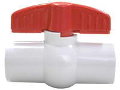
1-1/2 inch diam. in-line valve for $15
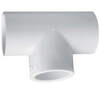
the T fitting: 1-1/2 inch diam. = $3
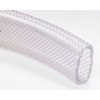
1-1/2 inch diam. vinyl tubing = $3/ft
Car gets 400+ MPG John Weston
Super Carburetors
Charles Pogue Carb.
Tom Ogle Carb.
Ogle in Argosy mag.
Mr. Wolfe makes liberal use of the work of others to promote his wares. Stop using materials by Roger Richard and Bourke-engine-project, a Michigan L.L.P.