Love one another as I love you
| Home | Old Testament | Historical Jesus |
| Early Christian History | Dead Sea Scrolls | Various Books |
Compassion, Heaven, Reincarnation
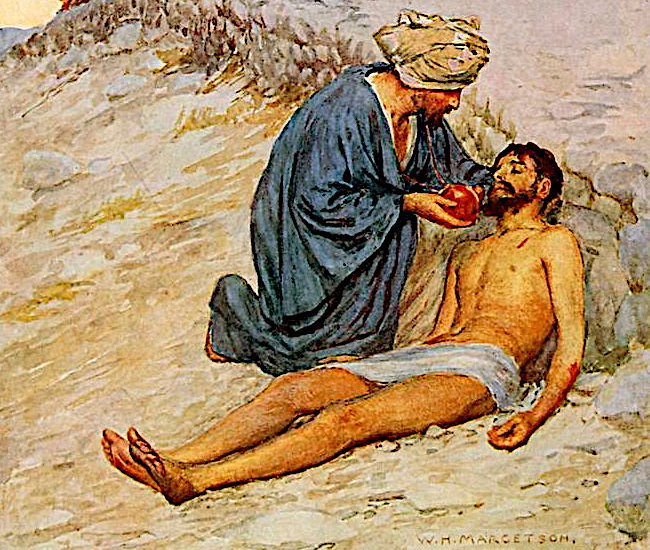 The Parable of the Good Samaritan: Luke 10:36-37 NKJV
"So which of these three do you think was neighbor to him who fell among the thieves?" And he said, "He who showed compassion on him." Then Jesus said to him, "Go and do likewise."
The Parable of Judgement Day
Matthew 25:34-35,40-41 NIV
"Then the King will say to those on his right, ‘Come, you who are blessed by my Father; ... For I was hungry and you gave me something to eat, I was thirsty and you gave me something to drink, I was a stranger and you invited me in, ...
“The King will reply, ‘Truly I tell you, whatever you did for one of the least of these brothers and sisters of mine, you did for me.’" "Then he will say to those on his left, ‘Depart from me, . ..'
1 Corinthians 13:1-2 -- ( and the whole [Love] chapter ) [*compassion*]
If I speak in the tongues of men and of angels, but have not love,(compassion), I am only a ringing gong or a clanging cymbal. ...
Matthew 14:14
And Jesus went forth, and saw a great multitude, and was moved with compassion toward them, and he healed their sick.
Matthew 20:34
Jesus had compassion on them and touched their eyes. Immediately they received their sight and followed him.
mark 1:41
And being moved with compassion, he stretched forth his hand, and touched him, and saith unto him, I will; be thou made clean.
Mark 6:34
And he came forth and saw a great multitude, and he had compassion on them, because they were as sheep not having a shepherd: and he began to teach them many things.
Luke 7:13-14
When he saw her, the Lord had compassion for her and said, "Don't cry." He stepped forward and touched the stretcher on which the dead man was being carried. Those carrying him stood still. Jesus said, "Young man, I say to you, get up."
...Jesus began to preach and to say,
"Repent, for the Kingdom of heaven is at hand"
Jesus and John say it over and over. It is important.
Matt.3:1-2
Now in those days John the Baptist came, preaching in the wilderness of Judea, saying, "Repent, for the kingdom of heaven is at hand."
Mark 1:4
And so John the Baptist appeared in the wilderness, preaching a baptism of repentance for the forgiveness of sins.
Matt.4:17
From that time Jesus began to preach and say, "Repent, for the kingdom of heaven is at hand."
Matt.11:20
Then he began to denounce the cities where most of his mighty works had been done, because they did not repent.
Mark 6:12
They went out and preached that people should repent.
Luke 13:3 unless you repent, you will all likewise perish
[and again]
Luke 13:5 unless you repent, you will all likewise perish
Matthew 18:3-4
And he said: "I tell you the truth, unless you change and become like little children, you will never enter the kingdom of heaven. Therefore, whoever humbles himself like this child is the greatest in the kingdom of heaven.
"good"
MATTHEW 19:17Why do you ask me concerning what is good? There is only One who is good.
MARK 10:18
“Why do you call me good?” Jesus answered. “No one is good—except God alone."
LUKE 18:18
Why do you call me good? No one is good except God alone.
Jesus would not even let a person call him "good"??!! Suppose we called him "great", or "Lord" or "God"! How much more would that upset him!?!
He said he was human, a "son of man" (Joseph) many times, knowing people would try to make a god out of him.
“Son of Man” a Human Being
 "The expression 'son of man' occurs frequently in the Old Testament as a synonym
for 'man' - a son of man is by nature man himself. It is a Semitic idiom
signifying 'human being.' Virtually all of the 107 occurrences
of the expression bear this out."
"The expression 'son of man' occurs frequently in the Old Testament as a synonym
for 'man' - a son of man is by nature man himself. It is a Semitic idiom
signifying 'human being.' Virtually all of the 107 occurrences
of the expression bear this out."
"It is Jesus most frequent self-designation, appearing over 80 times, to stress he was fully human."
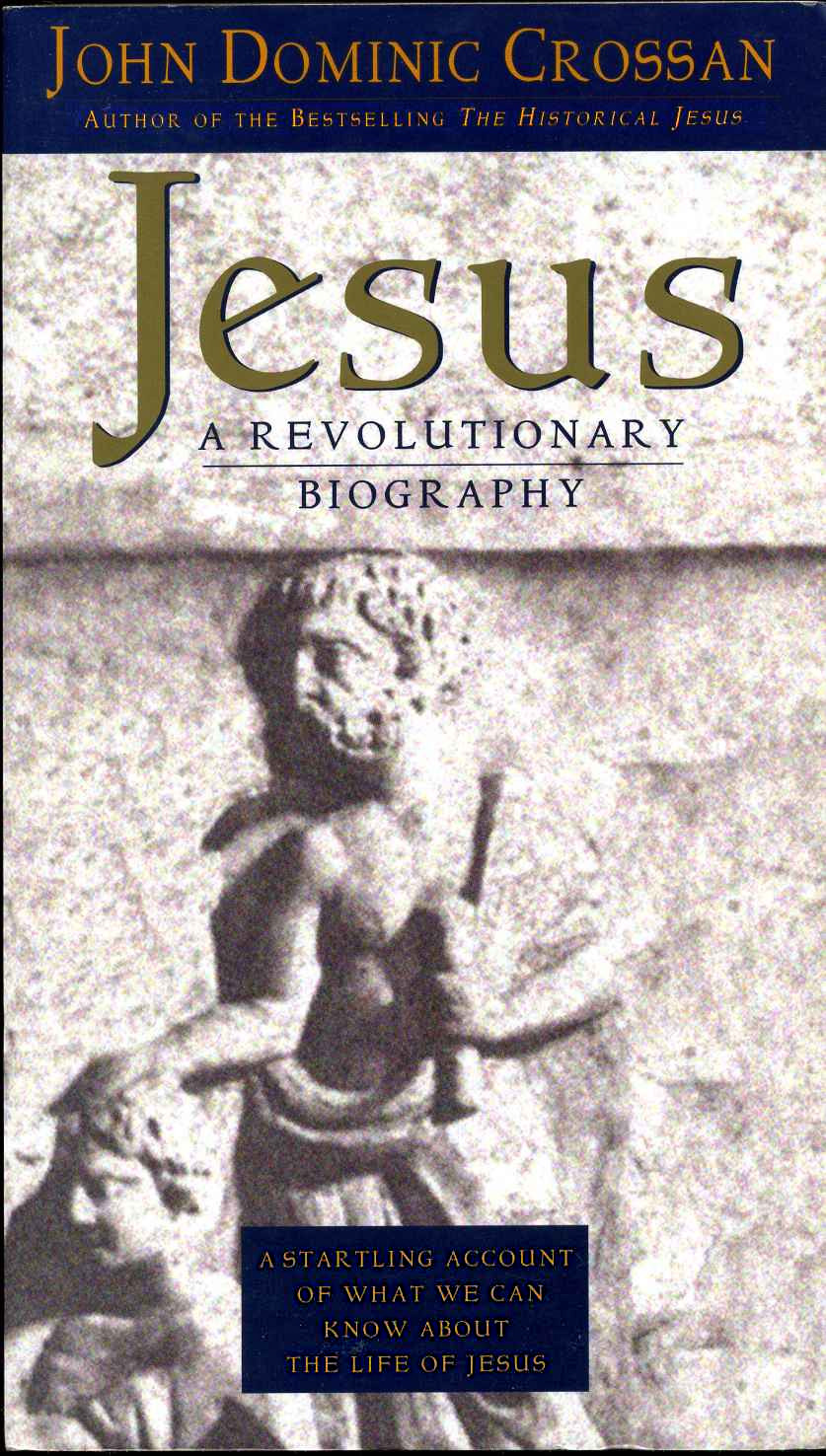
"The Hebrew or Aramaic term translated as 'son of man' is simply, like mankind in English, a chauvinistic way to describe all of humanity, ... man and son of man ... human beings and mortals ... That is of course what those former terms actually meant." pg.49,
"Jesus used the generic term 'son of man' to identify himself with those he was addressing, to emphasize that he shared with them a common destiny as we poor or destitute human beings. It was thereafter easier to create and place upon his lips certain titular 'Son of Man' sayings as the tradition of his words grew after his death." pg.51, Jesus A Revolutionary Biography by John Dominic Crossan
 "And when she saw the infant Jesus she exclaimed, behold Immanuel!
Behold the signet cross of the Messiah on his brow! And then the
woman knelt to worship him, as God with us, Immanuel; but one, a
master, clothed in white, appeared and said, Good woman, stay;
take heed to what you do; you may not worship man; this is idolatry.
This child is man, the son of man, and worthy of all praise.
[but] You shall adore and worship God; him only shall you serve.
"And when she saw the infant Jesus she exclaimed, behold Immanuel!
Behold the signet cross of the Messiah on his brow! And then the
woman knelt to worship him, as God with us, Immanuel; but one, a
master, clothed in white, appeared and said, Good woman, stay;
take heed to what you do; you may not worship man; this is idolatry.
This child is man, the son of man, and worthy of all praise.
[but] You shall adore and worship God; him only shall you serve.
The Aquarian Gospel Of Jesus The Christ 4:10-12 by Levi
In the year 325, in Nicea, the church was holding a council "the Council of Nicea" that declared that Christ was "the Savior God" and wrote a creed "the Nicean Creed" to enforce it, and today, we are not told how it all happened. Time after time Jesus refers to himself as a "son of man" (80 times) (as if he knew people would try to make a god out of him?); but the expected Messiah of the Hebrew people was a great prophet, NOT a god, and Jesus himself seems to oppose it: "No one is good except God alone" and "you are all gods". . . . We are all "Children Of God".
 "It is a common supposition that we have in the New Testament a
self-consistent story of the life of Jesus, followed by a plain
account of the beginnings of the church he founded. These
assumptions are not true. We do not have the story of Jesus; we have
only a fragmentary record. It is not self-consistent; it is
contradictory. The account of the beginnings of the church is not
simple; it is full of problems."
"It is a common supposition that we have in the New Testament a
self-consistent story of the life of Jesus, followed by a plain
account of the beginnings of the church he founded. These
assumptions are not true. We do not have the story of Jesus; we have
only a fragmentary record. It is not self-consistent; it is
contradictory. The account of the beginnings of the church is not
simple; it is full of problems."
"there were many Pagan deities during the time of Jesus and afterwards for whom quite similar claims were made and in whose names were preached quite similar doctrines. Mithras was a Redeemer of mankind; so were Tammuz, Adonis and Osiris. The view eventually taken of Jesus as a Redeemer was not a Judaic concept; nor was it held by the first Christians in Palestine. The Messiah the Jews and the Judaic Christians expected was not the Son of God but a messenger from God, not one who saved by blood-atonement but one whose salvation came from his rule of the earth in a Messianic kingdom.
The Meaning Of The Dead Sea Scrolls pg.85, 90; by A. Powell Davies
Heaven
Luke 17:20-21Once, having been asked by the Pharisees when the kingdom of God would come, Jesus replied, "The kingdom of God does not come with your careful observation, nor will people say, `Here it is,` or `There it is,` because the kingdom of God is within you."
 My own dying was a relief ... pg.152
certainly I dwell in a psychological heaven by earth's standards, for everywhere I sense a presence, ...that is well-intentioned, gentle yet powerful, and all-knowing. This seems to be a psychological presence of such stunning parts, however, that I can point to no one place and identify it as being there in contrast to being somewhere else. At the risk of understating, this presence seems more like a loving condition that permeates existence, and from which all existence springs.
... I am here always delightfully conscious of an extraordinary sense of safety that leads, say, to heroic acts and courage - naturally. There is the constant feeling that the universe is with me, for me, and with and for all others at the same time. Not only does it not conspire against me, but it ever lends its active support. -- pg.162
All theological and intellectual theories are beside the point in the reality of this phenomenon. I KNOW that this presence or loving condition forms itself into me, and into all other personalities. Yet this is not known to me without evidence. That evidence is a kind of direct, built-in-knowing - self-evident ... -- pg.163
The AFTERDEATH JOURNAL of an American Philosopher, by Jane Roberts
"She laughed as she showed me the tears that were rolling down her cheeks. I reassured her that hers was a common reaction, and that soon she'd feel cheerful. "Oh, I feel cheerful enough, " she said, "it's just that I realize that birth is not a joyous occasion. The two deaths I had in the two past lives [I re-experienced under hypnosis] tonight were very pleasant experiences. It's getting born that seems the tragedy."
page 25-6; LIFE BEFORE LIFE - by Helen Wambach
(from a college student's reaction to a hypnotic regression back to the time of her birth.)
[ no wonder we don't want to believe in reincarnation ]
[but remember:] “Let me emphasize that no one is forced to return to physical form.” ...
Matthew 18:3: I assure you that unless you change and become like children, you will never enter the Kingdom of heaven.
Mark 10:15: I assure you that whoever does not receive the Kingdom of God like a child will never enter it.
Luke 18:17: Remember this! Whoever does not receive the Kingdom of God like a child will never enter it.
"'Return good for evil; love your enemies.' ... Religion can be summed up, said Jesus, in two principles; 'Love God sincerely and other people as much as you love yourself.' [Mark 12:30-31; Matt 22:37-39; Luke 10:27] Jesus said: 'Do unto others as you wish them to do unto you.' He did not invent these summaries of 'the Law and the Prophets,' but he makes his emphasis clear by the fact of selecting them." pg.128
The Meaning Of The Dead Sea Scrolls by A. Powell Davies
John 13:34-35
“A new command I give you: Love one another. As I love you, so you must love one another. By this everyone will know that you are my disciples, if you love one another.”
Romans 12:19-20
Beloved, never avenge yourselves, but leave it to the wrath of God, for it is written, "Vengeance is mine, I will repay, says the Lord." To the contrary, "if your enemy is hungry, feed him; if he is thirsty, give him something to drink"
From my seminary years:
THE UNEXAMINED LIFE IS NOT WORTH LIVING
- Socrates"emphasizes continuous inquiry, challenging assumptions,
and pursuing knowledge about what is good and just."THE UNEXAMINED FAITH IS NOT WORTH HAVING
- James Luther Adams, theologian (echoing Socrates)"blindly accepting religious beliefs, even core doctrines, without critical thought, questioning, or personal understanding leads to a shallow, inauthentic faith, akin to sleepwalking through life, whereas true faith requires active, diligent exploration to discover genuine truth rather than passively adopting packaged beliefs"
The Prophecy
The Old Testament deliberately ends with
the prophecy of the coming Messiah:
(and Jesus confirms it)
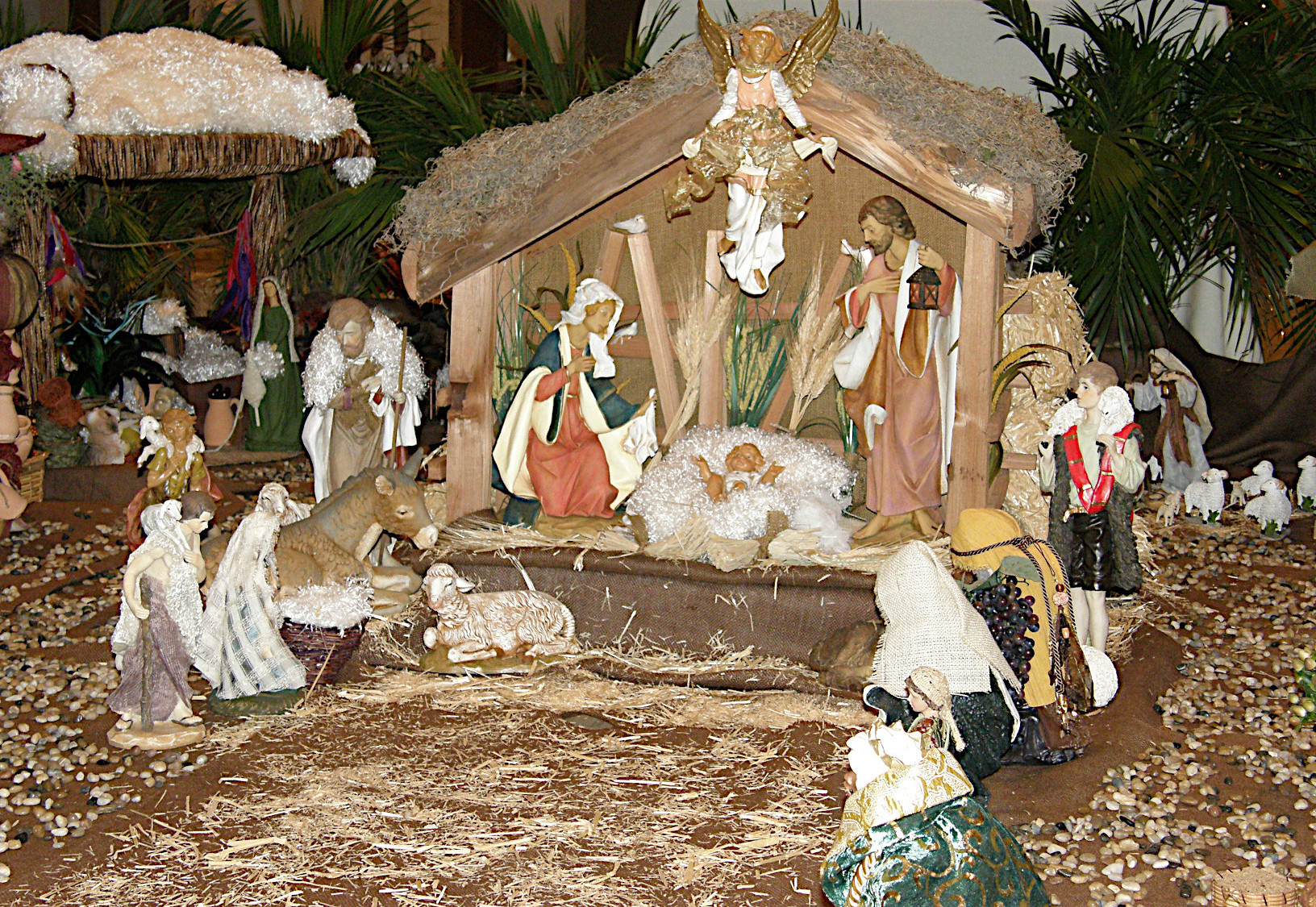 The last two verses of the Old Testament:
Malachi 4:5-6
But before the great and terrible day of the Lord comes, I will send you the prophet Elijah. And he will turn the hearts of the parents to their children... God has just (re)declared reincarnation! His prophet Malachi reports it declaring God's prophecy to everyone.
For all those who are in doubt about reincarnation, it has been
clearly stated that no one has to reincarnate. It is a choice.
"The stars in heaven" are a huge universe out there to explore!
What would keep us from exploring this grand universe? ...
drugs, alcohol, cigarettes, sex, ... etc.??
 “Let me emphasize that no one is forced to return to physical form.” ...
"Some are so overly fond of the bodies they left
behind that they are scarcely able to wait for an opportunity to form
another body and set to work indulging it. These souls are truly
earthbound"
“Let me emphasize that no one is forced to return to physical form.” ...
"Some are so overly fond of the bodies they left
behind that they are scarcely able to wait for an opportunity to form
another body and set to work indulging it. These souls are truly
earthbound"
pages 149, 126-127, A World Beyond by Ruth Montgomery
Reincarnation
Those who assembled the Bible knew that up through the time of Jesus, this passage was understood to mean there would come a messiah, a prophet, and that Elijah, reincarnated, would precede him. Therefore, on that statement, the Old Testament ends. The Pharasees and Essenes [Nazarenes], Jesus, all understood reincarnation. It was the Roman world that did not, and outlawed it.
Publicly, to the crowds, Jesus affirms the prophecy and that He is the awaited messiah by declaring that John is Elijah.
Jesus speaking to a crowd:
MATTHEW 11:13-15
Until the time of John, all the prophets and the law of Moses spoke about the kingdom; And if you are willing to believe their message, John is Elijah, whose coming was predicted. Listen, then, if you have ears!"
Jesus has just told them unconditionally that John is Elijah. "Listen, then, if you have ears!" * PAY ATTENTION! * Reincarnation is a fact. Period.
Those who "have ears" realize that makes Jesus the awaited Messiah and, they should pay attention. However, even some of the disciples did not understand (missed it? ... were NOT paying attention) and He had to tell them personally.
Jesus speaking to the disciples:
MATTHEW 17:10-13
Then the disciples asked Jesus, "Why do the teachers of the law say that Elijah has to come first?" "Elijah is indeed coming first," answered Jesus, "and he will get everything ready. but I tell you that Elijah has already come and people did not recognize him, but treated him just as they pleased. In the same way they will also mistreat the son of man." Then the disciples understood that he was talking to them about John the Baptist.
Just like everyone else, it is also true that the disciples all took reincarnation as a commonly and personally accepted reality or they would not have understood Jesus to know that John the baptist was Elijah, nor would they talk about a person committing sins even before being born:: First God and now Jesus affirms reincarnation. The heathen Roman world had NO right or AUTHORITY to tell Jesus or God that reincarnation does not exist!!
Jesus and his disciples assume reincarnation as a common reality:
JOHN 9:1-3
As Jesus was walking along, he saw a man who had been born blind. his disciples asked him, "Teacher, whose sin caused him to be born blind? Was it his own or his parents' sin?" Jesus answered, "His blindness has nothing to do with his sins or his parents' sins."
Again, the disciples and Jesus all take reincarnation as a commonly and personally accepted reality, for everyone: Only if a person has incarnated before, could they be BORN blind to repay some past sin. In a society that does not believe in reincarnation [such as ours!], such a question would not even be thought of!
Reincarnation was commonly accepted:
Matthew 16:13-14
Jesus went to the territory near the town of Caesarea Philippi, where he asked his disciples, "Who do people say the son of man is?" "Some say John the Baptist," they answered. "others say Elijah, while others say Jeremiah or some other prophet."
The Messiah is expected to be a great prophet and Reincarnation was not just a belief unique to Jesus and his followers. It was not just their own personal interpretation of the scripture. It was an officially-universally accepted reality within the Jewish community [except among the few, rich, Sadducees].
 The Essenes, a Jewish sect recently made famous
through discovery of the Dead Sea scrolls, and also the
Biblical Pharisees believed in reincarnation, as did the
followers of Jesus and the early Christians. pg.15-16
The Essenes, a Jewish sect recently made famous
through discovery of the Dead Sea scrolls, and also the
Biblical Pharisees believed in reincarnation, as did the
followers of Jesus and the early Christians. pg.15-16
The Jewish Talmud [Kabbalah] states that the soul of Abel passed into the body of Seth and subsequently into that of Moses. The Koran of the Muslim faith declares: “God generates beings, and sends them back over and over again, until they return to Him.” pg.17-18
Companions Along The Way by Ruth Montgomery
Reincarnation was a part of the Hebrew beliefs including Jesus and his followers "Yes, Judaism explicitly accepts reincarnation. Many Talmudic texts speak explicitly of soul “rebirth" "reincarnation is a concept found in the teachings of the kabbalah" "The Hebrew word for reincarnation is gilgul, which means "to spin". In the Kabbalah, the soul spins through many bodies, striving for a higher form of perfection."
Why was reincarnation removed from Christian beliefs?
[domination and control]:
When the emperor Justinian was having trouble with his overworked slaves committing suicide, his wife pointed out that as long as they believed they would come back again, hoping for a better life, the suicides would continue.
So Emperor Justinian had the teachings on reincarnation banned.
Emperor Justinian was able to apply the full power of Rome and his authority to stop the belief in reincarnation.
He forced the ruling cardinals to draft a papal decree stating that anyone who believes that souls come from God and return to God will be punished by death. [reincarnation]
Pope Vigilius refused to sign the decree and was arrested. He escaped and went into hiding. Eventually he was captured and forced to sign the decree.
the decree of the Fifth Ecumenical Council, A.D. 545
(a.k.a.: the Second Council of Constantinople), in Nicene
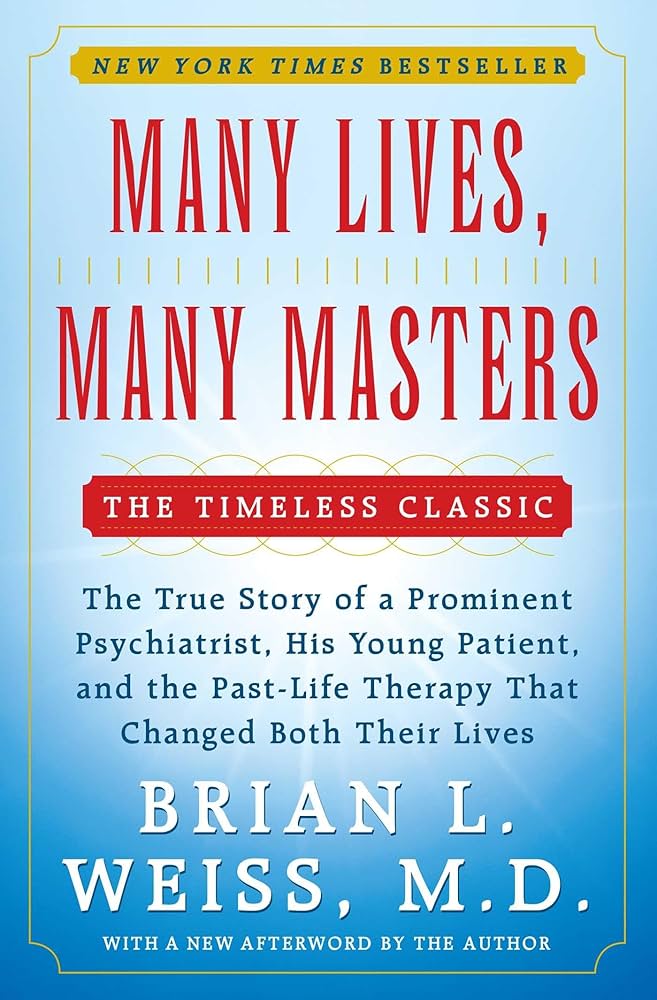 "During the week I had reviewed my textbook from a comparative
religions course taken during my freshman year at Columbia Univ.
There were indeed references to reincarnation in the Old and New
Testaments. In A.D. 325 the Roman emperor Constantine the Great,
along with his mother, Helena, had deleted references to
reincarnation contained in the New Testament.
"During the week I had reviewed my textbook from a comparative
religions course taken during my freshman year at Columbia Univ.
There were indeed references to reincarnation in the Old and New
Testaments. In A.D. 325 the Roman emperor Constantine the Great,
along with his mother, Helena, had deleted references to
reincarnation contained in the New Testament.
The Second Council of Constantinople, meeting in A.D. 553, confirmed this action and declared the concept of reincarnation a heresy." pg.35-36
- Many Lives, Many Masters by Brian L. Weiss, M.D.
In AD 543, the then ruler of the Roman Empire, Emperor Justinian I, blatantly and brutally removed the Teachings of reincarnation from the scriptures of Christian orthodox doctrines. For the first 500 years of Christianity, reincarnation was a vital component of Christian doctrines.
https://www.amazon.com/Reincarnation-Removed-Christian-Scriptures-Justinian-ebook/dp/B0927HLD75
In A.D. 303 the pagan emperor Diocletian had undertaken to destroy all Christian writings that could be found. As a result, Christian documents - especially those in Rome - all but vanished. When Constantine commissioned new versions of these documents (in 331), it enabled the custodians of orthodoxy to revise, edit, and rewrite their material as they saw fit, in accordance with their tenets. ... [today] Of the five thousand extant early manuscript versions of the New Testament, not one predates the fourth century.
pg.368, Holy Blood, Holy Grail by Baigent, Leigh, & Lincoln
 "Faith, in short, was for Constantine a political matter; and any
faith that was conductive to unity was treated with forbearance. . . .
In A.D. 325, for example, he convened the Council of Nicea.
At this council, the dating of Easter was established. Rules were
framed that defined the authority of bishops, thereby paving the
way for a concentration of power in ecclesiastical hands. Most
important of all, the Council of Nicea decided, by vote, that Jesus
was a god, not a mortal prophet. Again, however, it must be
emphasized that Constantine's paramount consideration was not piety
but unity and expediency. As a god, Jesus could be associated
conveniently with Sol Invictus. As a mortal prophet he would have
been more difficult to accommodate. In short, Christian orthodoxy
lent itself to a politically desirable fusion with the official
state religion; and insofar as it did so Constantine conferred his
support upon Christian orthodoxy.
"Faith, in short, was for Constantine a political matter; and any
faith that was conductive to unity was treated with forbearance. . . .
In A.D. 325, for example, he convened the Council of Nicea.
At this council, the dating of Easter was established. Rules were
framed that defined the authority of bishops, thereby paving the
way for a concentration of power in ecclesiastical hands. Most
important of all, the Council of Nicea decided, by vote, that Jesus
was a god, not a mortal prophet. Again, however, it must be
emphasized that Constantine's paramount consideration was not piety
but unity and expediency. As a god, Jesus could be associated
conveniently with Sol Invictus. As a mortal prophet he would have
been more difficult to accommodate. In short, Christian orthodoxy
lent itself to a politically desirable fusion with the official
state religion; and insofar as it did so Constantine conferred his
support upon Christian orthodoxy.
"Historically, all Christian churches celebrated Christ's birth on January 6th until the fourth century." [the 300's]
[until Constantine changed it in 336 AD to Dec.25th, [then] the winter solstice, celebrated as the birth of the sun gods Mithras and Sol Invictus] "early Christians adopted solar imagery and traditions, like depicting Christ with solar halos, reflecting Sol's attributes as "Unconquered Sun" and divine light to make Christianity more appealing"
"Early Christian art, such as a 3rd-century mosaic in the Tomb of the Julii (under St. Peter's Basilica), shows Christ depicted as Helios (the Greek sun god) driving a solar chariot, with solar rays emanating from his head, much like Sol Invictus."
Thus, a year after the council of Nicea he sanctioned the confistication and destruction of all works that challenged [Roman] orthodox teachings ...
 “during an Ecumenical Council meeting of the Catholic Church in
Constantinople [325 AD] called the Council of Nicea.
The Council members voted to strike those teachings from the Bible
in order to solidify Church control.”
“during an Ecumenical Council meeting of the Catholic Church in
Constantinople [325 AD] called the Council of Nicea.
The Council members voted to strike those teachings from the Bible
in order to solidify Church control.”
- Out On A Limb by Shirley MacLaine
 A discovery made by a psychologist (Helen Wambach) and mentioned
in her book, LIFE BEFORE LIFE: Having put over 750 people Under
hypnosis, often in group situations, and regressing them beck to
the time that they were born. She discovered that 90% experienced
a past life [pg.8] and that [all the] "90% of my subjects found
that death was plesant." [pg.41 & 63] over 87% knew
relatives and friends in their present lives from past lives,
and while they chose to be born again, many, 72%, did so
reluctantly - only 28% felt enthusiastic about it. Another
author, Dick Sutphen, has hypnotized hundreds of people and also says
that about 90% of his subjects remember past lives. However, it
is only from Helen Wambach that I got the clue to a pervasive,
resistance to reincarnation. Given that most people (72%)
didn't earnestly want to be here this time. I can now
understand our general resistance to the belief in coming back
again, myself included. "no thanks". So, now, how do we rise
above this merry-go-round?
A discovery made by a psychologist (Helen Wambach) and mentioned
in her book, LIFE BEFORE LIFE: Having put over 750 people Under
hypnosis, often in group situations, and regressing them beck to
the time that they were born. She discovered that 90% experienced
a past life [pg.8] and that [all the] "90% of my subjects found
that death was plesant." [pg.41 & 63] over 87% knew
relatives and friends in their present lives from past lives,
and while they chose to be born again, many, 72%, did so
reluctantly - only 28% felt enthusiastic about it. Another
author, Dick Sutphen, has hypnotized hundreds of people and also says
that about 90% of his subjects remember past lives. However, it
is only from Helen Wambach that I got the clue to a pervasive,
resistance to reincarnation. Given that most people (72%)
didn't earnestly want to be here this time. I can now
understand our general resistance to the belief in coming back
again, myself included. "no thanks". So, now, how do we rise
above this merry-go-round?
"She laughed as she showed me the tears that were rolling down her cheeks. I reassured ther that hers was a common reaction, and that soon she'd feel cheerful." "Oh, I feel cheerful enough, " she said, "it's just that I realize that birth is not a joyous occasion. The two deaths I had in the two past lives tonight were very pleasant experiences. It's getting born that seems the tragedy."
page 25-6 Life Before Life - by Helen Wambach
(from a college student's reaction to a hypnotic regression back to the time of her birth.)
A pastor, replying to outside criticism of church members, once said that "Those in the church who curse, drink to excess, or are unfaithful to their spouses are no different from the people who claim to work for a company but don't do their jobs. The company and the church are both victims of such behavior.
While this is true, what gives organized religion a bad name is the immorality, the prejudice, and the bigotry, of the clergy, when they betray their members or, feed the flames of hate and violence. Arousing their people into criminal acts of violence, against gays, blacks, Muslims, immigrants, whoever they don't like or understand. These leaders are as shameful as those in the past who supported slavery, condoned murder and, committed other unspeakable acts of violence for whatever their historical-cultural reasons. Sometimes it seems they never learn.
Then a catastrophy like hurricane Katrina, destroying New Orleans, comes along (Sept. 2005) and people start helping each other even if "religion" won't. ...
Forest King, a "dyed in the wool conservative" has been sharing his home with the Meehan-Hoo family, a lesbian couple with three children, ages 5, 7 and 9. "The adults are same sex, and I don't care," he says. "I don't care if they're purple and got horns coming out of their faces. They're Americans first."
King's town of Attleboro has aggressively adopted the Meehan-Hoos. Locals have given them $600 in Old Navy gift cards and $60 in Borders certificates. A nearby inn has donated a romantic dinner for two for the couple. A coffee shop will deliver a pastry tray every week, "from now until whenever," according to Kim Allard, a city councilor who has helped arrange donations.

ip: 216.73.216.246